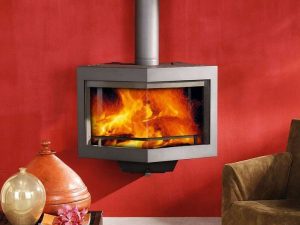
Make sure your stove or flue isn’t next to combustible materials. If the stove backs on to a wooden wall, fit a heat shield to protect it. The flue pipes need to be kept away from combustible materials when they pass through floors, ceilings etc.
You need a hearth – slate or a flagstone – under the stove, to catch sparks and absorb heat. You don’t want sparks hitting a carpet or anything flammable.
In a yurt: if a twin-wall flue passes through the canvas, you’ll need some sort of a heat shield to protect the canvas. On a boat or vehicle: make sure the stove is bolted down through the feet.
Carbon monoxide can kill, so it’s a really good idea to do a smoke test (above). The good news is that burning coal is much more dangerous than wood, as wood smoke tends to make you cough, and wakes you up. A CO alarm in the same room as the stove is compulsory. The room with the stove needs to be ventilated – either a vent in the wall, or a direct vent to feed air straight to the stove.
Make sure your chimney is swept at least once a year, and twice if there’s a lot of soot the first time. You can employ a chimney sweep to do it, or you can do it yourself. Buy polypropylene rods that screw together (the same as drain rods), with a flue-cleaning head. If you have a bendy metal chimney, you might need more flexible nylon rods.
Here’s a little wood-burning guide to help you enjoy your stove. If you need more information, you can get our book, Heating with Wood; or you can ask specific questions in the comments section at the bottom of the topic introduction. Good luck!
Thanks to Sune Nightingale of Stoves Online.